American League pitching leaders
American League batting leaders
National League pitching leaders
National League batting leaders
Published September 6, 2026
The 1964 baseball season will forever live in infamy in Philadelphia: the Phillies had a 6 and a half game lead in the National League with 12 games to play. They lost their next 10 games and finished a game behind the St. Louis Cardinals, who went on to win the World Series. Books have been written about the 1964 NL Season.
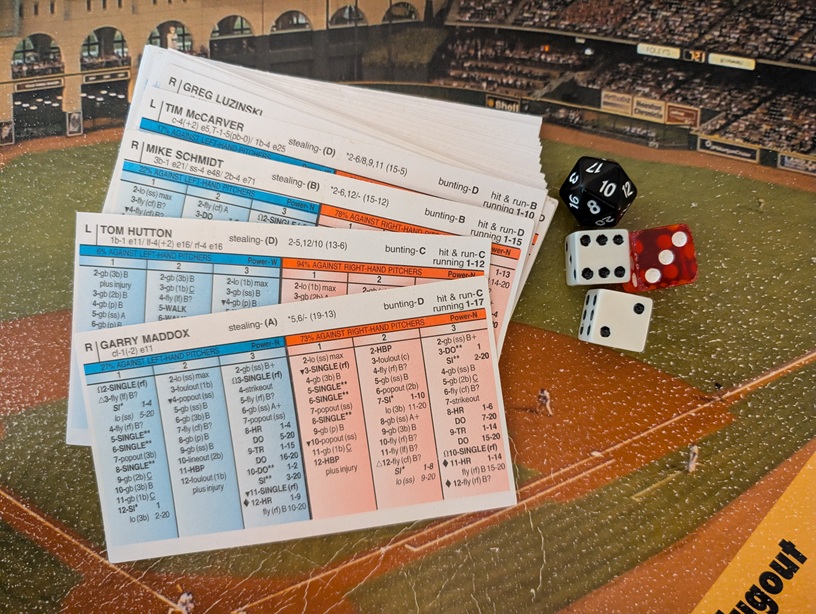
I played this 1964 Strat--Matic mini-season to see if I could manage the Phillies to their first World Series title. I played four teams from each league. In the NL, the Cardinals, Phillies, Reds, and Giants all won 90 games and battled down the stretch in an epic pennant race. In the AL, I played the Yankees, White Sox, Orioles, and Twins. The Yankees won 97 games, winning the AL race by a game over the White Sox and two over the Orioles. Although the Twins finished tied for 6th, they had the fourth best "expected win percentage" that year (based on runs scored vs runs allowed), so I chose them as my fourth team.
The schedule was set up as a sequence of 2-game series, with an off-day after every second series. Each team could use a four-man pitching rotation.
To simulate the injuries that occur in a full season, I rolled the 20-sided die for each team prior to every game:
| Rank | Team | W | L | Pct | Games Behind |
|---|---|---|---|---|---|
| 1 | Chicago | 15 | 9 | 0.625 | - |
| 2 | New York | 12 | 12 | 0.500 | 3 |
| 3 | Minnesota | 12 | 12 | 0.500 | 3 |
| 4 | Baltimore | 9 | 15 | 0.375 | 6 |
Most Valuable Hitter: Harmon Killebrew, Minnesota
Most Valuable Pitcher: Wally Bunker, Baltimore
| Rank | Team | W | L | Pct | Games Behind |
|---|---|---|---|---|---|
| 1 | Philadelphia | 15 | 9 | 0.625 | - |
| 2 | St. Louis | 14 | 10 | 0.583 | 1 |
| 3 | Cincinnati | 13 | 11 | 0.542 | 2 |
| 4 | San Francisco | 6 | 18 | 0.250 | 8 |
Most Valuable Hitter: John Callison, Philadelphia
Most Valuable Pitcher: Bob Gibson, St. Louis
Minimum 24 Innings Pitched
| Player | Team | IP | W | L | SO | BB | ERA | WHIP | SO9 |
|---|---|---|---|---|---|---|---|---|---|
| Bunker | BAL | 44.00 | 3 | 1 | 24 | 9 | 1.02 | 0.73 | 4.91 |
| Horlen | CHA | 41.00 | 2 | 1 | 29 | 13 | 1.32 | 1.02 | 6.37 |
| Buzhardt | CHA | 39.00 | 2 | 1 | 25 | 12 | 1.38 | 1.18 | 5.77 |
| Bouton | NYA | 44.33 | 3 | 1 | 16 | 11 | 1.62 | 0.65 | 3.25 |
| Ford | NYA | 47.33 | 3 | 1 | 29 | 11 | 2.09 | 0.91 | 5.51 |
| Arrigo | MIN | 24.67 | 2 | 1 | 19 | 10 | 2.19 | 1.01 | 6.93 |
| Pascual | MIN | 40.00 | 4 | 1 | 31 | 17 | 2.25 | 1.25 | 6.97 |
| Stottlemyre | NYA | 44.33 | 2 | 3 | 20 | 18 | 2.44 | 0.95 | 4.06 |
| Peters | CHA | 45.00 | 3 | 2 | 40 | 17 | 2.60 | 1.13 | 8.00 |
| Downing | NYA | 34.00 | 0 | 2 | 36 | 22 | 2.65 | 1.44 | 9.53 |
| Pappas | BAL | 35.00 | 2 | 2 | 20 | 10 | 3.09 | 1.26 | 5.14 |
| Kaat | MIN | 27.00 | 1 | 2 | 14 | 7 | 4.33 | 1.41 | 4.67 |
| Pizarro | CHA | 36.67 | 1 | 2 | 28 | 13 | 4.42 | 1.25 | 6.87 |
| Grant | MIN | 36.67 | 2 | 2 | 15 | 11 | 4.42 | 1.31 | 3.68 |
| Roberts | BAL | 35.00 | 2 | 4 | 15 | 10 | 4.89 | 1.49 | 3.86 |
| McNally | BAL | 29.00 | 0 | 4 | 17 | 15 | 5.59 | 1.66 | 5.28 |
| Pascual, MIN | 4 |
| Bouton, NYA | 3 |
| Bunker, BAL | 3 |
| Ford, NYA | 3 |
| Peters, CWA | 3 |
| Peters, CWA | 2 |
| Bouton, NYA | 1 |
| Horlen, CWA | 1 |
| Ford, NYA | 1 |
| Pascual, MIN | 1 |
| Stottlemyre, NYA | 1 |
| Peters, CWA | 40 |
| Downing, NYA | 36 |
| Pascual, MIN | 31 |
| Horlen, CWA | 29 |
| Ford, NYA | 29 |
| Pizarro, CWA | 28 |
| Wilhelm, CWA | 8 |
| Miller, BAL | 3 |
| Ramos, NYA | 3 |
| Worthington, MIN | 3 |
| Klippstein, MIN | 12 |
| Barber, BAL | 10 |
| Fisher, CWA | 10 |
| Hall, BAL | 10 |
Minimum 56 Plate Appearances
| Player | Team | AB | R | H | 2B | 3B | HR | RBI | BA | OBP | SLG |
|---|---|---|---|---|---|---|---|---|---|---|---|
| Tresh | NYA | 86 | 14 | 31 | 8 | 1 | 2 | 7 | 0.360 | 0.455 | 0.547 |
| Oliva | MIN | 89 | 21 | 32 | 4 | 0 | 2 | 10 | 0.360 | 0.412 | 0.472 |
| Killebrew | MIN | 75 | 13 | 24 | 2 | 0 | 8 | 19 | 0.320 | 0.452 | 0.667 |
| McRaw | CHA | 67 | 4 | 21 | 4 | 1 | 2 | 4 | 0.313 | 0.343 | 0.493 |
| Hall | MIN | 74 | 14 | 23 | 6 | 2 | 4 | 15 | 0.311 | 0.378 | 0.608 |
| Howard | NYA | 73 | 8 | 21 | 1 | 1 | 2 | 5 | 0.288 | 0.366 | 0.411 |
| Aparicio | BAL | 87 | 11 | 24 | 4 | 0 | 1 | 5 | 0.276 | 0.357 | 0.356 |
| Mantle | NYA | 79 | 14 | 21 | 4 | 0 | 6 | 11 | 0.266 | 0.414 | 0.544 |
| Maris | NYA | 79 | 12 | 21 | 0 | 1 | 2 | 10 | 0.266 | 0.356 | 0.367 |
| B Allen | MIN | 69 | 9 | 18 | 5 | 0 | 1 | 7 | 0.261 | 0.301 | 0.377 |
| Ward | CHA | 77 | 9 | 20 | 6 | 0 | 4 | 13 | 0.260 | 0.352 | 0.494 |
| Buford | CHA | 75 | 8 | 19 | 4 | 3 | 0 | 8 | 0.253 | 0.333 | 0.387 |
| Hansen | CHA | 86 | 10 | 21 | 4 | 0 | 2 | 9 | 0.244 | 0.337 | 0.360 |
| Skowron | CHA | 67 | 6 | 16 | 1 | 0 | 1 | 5 | 0.239 | 0.282 | 0.299 |
| Siebern | BAL | 67 | 12 | 16 | 2 | 1 | 2 | 7 | 0.239 | 0.427 | 0.388 |
| Nicholson | CHA | 63 | 11 | 15 | 1 | 0 | 3 | 7 | 0.238 | 0.333 | 0.397 |
| B Robinson | BAL | 78 | 8 | 18 | 3 | 1 | 1 | 8 | 0.231 | 0.277 | 0.333 |
| Rollins | MIN | 80 | 8 | 18 | 3 | 2 | 2 | 4 | 0.225 | 0.326 | 0.388 |
| Adair | BAL | 69 | 2 | 15 | 1 | 0 | 1 | 7 | 0.217 | 0.270 | 0.275 |
| Kubek | NYA | 97 | 2 | 21 | 4 | 0 | 0 | 4 | 0.216 | 0.240 | 0.258 |
| Powell | BAL | 84 | 6 | 18 | 2 | 0 | 2 | 10 | 0.214 | 0.298 | 0.310 |
| Gonzalez | NYA | 56 | 2 | 12 | 3 | 0 | 0 | 2 | 0.214 | 0.267 | 0.268 |
| Battey | MIN | 59 | 5 | 12 | 3 | 0 | 0 | 8 | 0.203 | 0.299 | 0.254 |
| Fl. Robinson | CHA | 85 | 6 | 15 | 1 | 0 | 1 | 5 | 0.176 | 0.213 | 0.224 |
| Allison | MIN | 69 | 4 | 12 | 3 | 0 | 0 | 4 | 0.174 | 0.296 | 0.217 |
| C Boyer | NYA | 79 | 3 | 12 | 2 | 0 | 1 | 6 | 0.152 | 0.183 | 0.215 |
| Pepitone | NYA | 79 | 3 | 12 | 1 | 0 | 0 | 10 | 0.152 | 0.193 | 0.165 |
| Richardson | NYA | 78 | 6 | 11 | 4 | 0 | 1 | 1 | 0.141 | 0.202 | 0.231 |
| Versalles | MIN | 88 | 7 | 12 | 3 | 0 | 1 | 6 | 0.136 | 0.200 | 0.205 |
| Bowens | BAL | 74 | 2 | 9 | 3 | 0 | 1 | 9 | 0.122 | 0.177 | 0.203 |
| Killebrew, MIN | 8 |
| Mantle, NYA | 6 |
| Hall, MIN | 4 |
| Ward, CWA | 4 |
| Tresh, NYA | 8 |
| Hall, MIN | 6 |
| Ward, CWA | 6 |
| B Allen, MIN | 5 |
| Buford, CWA | 3 |
| Hall, MIN | 2 |
| Rollins, MIN | 2 |
| Oliva, MIN | 21 |
| Hall, MIN | 14 |
| Mantle, NYA | 14 |
| Tresh, NYA | 14 |
| Killebrew, MIN | 13 |
| Killebrew, MIN | 19 |
| Hall, MIN | 15 |
| Ward, CWA | 13 |
| Mantle, NYA | 11 |
| Aparicio, BAL | 6 |
| Oliva, MIN | 3 |
| McCraw, CWA | 2 |
Minimum 24 Innings Pitched
| Player | Team | IP | W | L | SO | BB | ERA | WHIP | SO9 |
|---|---|---|---|---|---|---|---|---|---|
| Gibson | STL | 51.67 | 3 | 1 | 40 | 15 | 0.87 | 0.99 | 6.97 |
| Bolin | SF | 35.00 | 2 | 1 | 23 | 8 | 1.80 | 0.80 | 5.91 |
| Maloney | CIN | 42.33 | 3 | 2 | 46 | 16 | 1.91 | 0.97 | 9.78 |
| Bunning | PHI | 48.00 | 3 | 1 | 46 | 11 | 2.06 | 0.88 | 8.62 |
| Short | PHI | 43.00 | 3 | 2 | 32 | 11 | 2.30 | 1.00 | 6.70 |
| Craig | STL | 38.67 | 2 | 3 | 14 | 9 | 2.33 | 1.11 | 3.26 |
| Purkey | CIN | 40.33 | 1 | 1 | 18 | 6 | 2.45 | 0.97 | 4.02 |
| Culp | PHI | 25.00 | 4 | 0 | 23 | 8 | 2.88 | 1.40 | 8.28 |
| Simmons | STL | 39.00 | 2 | 2 | 13 | 9 | 3.00 | 1.13 | 3.00 |
| O'Toole | CIN | 41.00 | 3 | 3 | 30 | 5 | 3.07 | 1.10 | 6.59 |
| G Perry | SF | 42.33 | 2 | 4 | 37 | 11 | 3.40 | 1.16 | 7.87 |
| Jay | CIN | 27.00 | 2 | 1 | 13 | 7 | 3.67 | 1.07 | 4.33 |
| Marichal | SF | 41.67 | 1 | 2 | 39 | 9 | 3.89 | 1.30 | 8.42 |
| Hendley | SF | 25.33 | 1 | 3 | 20 | 9 | 5.33 | 1.58 | 7.11 |
| Bennett | PHI | 26.33 | 1 | 3 | 15 | 9 | 5.81 | 1.71 | 5.13 |
| Sadecki | STL | 30.00 | 2 | 2 | 15 | 13 | 6.00 | 1.93 | 4.50 |
| Culp, PHI | 4 |
| Bunning, PHI | 3 |
| Gibson, STN | 3 |
| Maloney, CIN | 3 |
| O'Toole, CIN | 3 |
| Short, PHI | 3 |
| Bunning, PHI | 3 |
| G Perry, SF | 3 |
| Short, PHI | 3 |
| Gibson, STN | 2 |
| Bunning, PHI | 46 |
| Maloney, CIN | 46 |
| Gibson, STN | 40 |
| Marichal, SF | 39 |
| G Perry, SF | 37 |
| Ellis, CIN | 5 |
| Schultz, STN | 4 |
| Baldschun, PHI | 4 |
| Baldschun, PHI | 10 |
| Ellis, CIN | 10 |
| Sandford, SF | 10 |
| Duren, CIN | 9 |
| Humphreys, STN | 9 |
Minimum 56 Plate Appearances
| Player | Team | AB | R | H | 2B | 3B | HR | RBI | BA | OBP | SLG |
|---|---|---|---|---|---|---|---|---|---|---|---|
| Callison | PHI | 84 | 22 | 34 | 4 | 2 | 7 | 23 | 0.405 | 0.462 | 0.750 |
| Covington | PHI | 71 | 15 | 25 | 6 | 0 | 3 | 13 | 0.352 | 0.403 | 0.563 |
| Groat | SLN | 81 | 9 | 26 | 10 | 0 | 0 | 6 | 0.321 | 0.353 | 0.444 |
| Flood | SLN | 97 | 11 | 31 | 7 | 1 | 0 | 6 | 0.320 | 0.353 | 0.412 |
| McCovey | SF | 65 | 14 | 20 | 2 | 1 | 7 | 15 | 0.308 | 0.416 | 0.692 |
| McCarver | SLN | 69 | 11 | 21 | 3 | 0 | 2 | 8 | 0.304 | 0.333 | 0.435 |
| F Robinson | CIN | 93 | 17 | 28 | 11 | 0 | 5 | 11 | 0.301 | 0.375 | 0.581 |
| Cardenas | CIN | 87 | 7 | 25 | 5 | 0 | 3 | 14 | 0.287 | 0.319 | 0.448 |
| Herrnstein | PHI | 56 | 4 | 16 | 4 | 1 | 0 | 7 | 0.286 | 0.310 | 0.393 |
| White | SLN | 91 | 12 | 26 | 4 | 0 | 3 | 10 | 0.286 | 0.330 | 0.429 |
| Shannon | SLN | 78 | 9 | 22 | 2 | 0 | 5 | 14 | 0.282 | 0.341 | 0.500 |
| Brock | SLN | 97 | 15 | 27 | 2 | 1 | 3 | 10 | 0.278 | 0.314 | 0.412 |
| T Gonzalez | PHI | 69 | 3 | 19 | 6 | 0 | 0 | 11 | 0.275 | 0.315 | 0.362 |
| Cepeda | SF | 77 | 11 | 21 | 0 | 1 | 4 | 8 | 0.273 | 0.371 | 0.455 |
| Lanier | SF | 85 | 9 | 23 | 3 | 1 | 3 | 8 | 0.271 | 0.295 | 0.435 |
| Mays | SF | 89 | 11 | 23 | 3 | 2 | 4 | 7 | 0.258 | 0.353 | 0.472 |
| K Boyer | SLN | 90 | 10 | 23 | 1 | 1 | 3 | 11 | 0.256 | 0.330 | 0.389 |
| Taylor | PHI | 85 | 13 | 21 | 4 | 0 | 0 | 3 | 0.247 | 0.289 | 0.294 |
| D Johnson | CIN | 82 | 11 | 20 | 3 | 0 | 4 | 13 | 0.244 | 0.311 | 0.427 |
| Rose | CIN | 88 | 11 | 21 | 4 | 0 | 2 | 6 | 0.239 | 0.280 | 0.352 |
| Allen | PHI | 88 | 14 | 20 | 5 | 4 | 3 | 11 | 0.227 | 0.284 | 0.477 |
| Davenport | SF | 69 | 4 | 15 | 2 | 1 | 0 | 4 | 0.217 | 0.299 | 0.275 |
| Pinson | CIN | 99 | 12 | 21 | 3 | 2 | 4 | 8 | 0.212 | 0.250 | 0.404 |
| Kuenn | SF | 57 | 3 | 12 | 2 | 0 | 1 | 3 | 0.211 | 0.224 | 0.298 |
| Amaro | PHI | 59 | 6 | 12 | 2 | 0 | 1 | 3 | 0.203 | 0.266 | 0.288 |
| Edwards | CIN | 65 | 4 | 13 | 4 | 0 | 1 | 5 | 0.200 | 0.235 | 0.308 |
| T Harper | CIN | 75 | 14 | 15 | 4 | 0 | 0 | 3 | 0.200 | 0.318 | 0.253 |
| Haller | SF | 67 | 6 | 13 | 0 | 0 | 1 | 8 | 0.194 | 0.270 | 0.239 |
| Javier | SLN | 90 | 2 | 16 | 0 | 0 | 1 | 8 | 0.178 | 0.221 | 0.211 |
| M Alou | SF | 62 | 3 | 11 | 1 | 1 | 0 | 0 | 0.177 | 0.227 | 0.226 |
| Hart | SF | 76 | 7 | 12 | 2 | 0 | 0 | 3 | 0.158 | 0.247 | 0.184 |
| Callison, PHI | 7 |
| McCovey, SF | 7 |
| F Robinson, CIN | 5 |
| Shannon, STN | 5 |
| Cepeda, SF | 4 |
| D Johnson, CIN | 4 |
| Mays, SF | 4 |
| Pinson, CIN | 4 |
| F Robinson, CIN | 11 |
| Groat, STN | 10 |
| Flood, STN | 7 |
| Covington, PHI | 6 |
| T Gonzalez, PHI | 6 |
| Allen, PHI | 4 |
| Callison, PHI | 2 |
| Mays, SF | 2 |
| Pinson, CIN | 2 |
| Callison, PHI | 22 |
| F Robinson, CIN | 17 |
| Brock, STN | 15 |
| Covington, PHI | 15 |
| Allen, PHI | 14 |
| Harper, CIN | 14 |
| Callison, PHI | 23 |
| McCovey, SF | 15 |
| Cardenas, CIN | 14 |
| Shannon, STN | 14 |
| Covington, PHI | 13 |
| D Johnson, CIN | 13 |
| McCovey, SF | 14 |
| Brock, STN | 7 |
| Taylor, PHI | 3 |
| Game 1 – Connie Mack Stadium | R | H | E | Pitchers | |||||||||||
|---|---|---|---|---|---|---|---|---|---|---|---|---|---|---|---|
| CHA | 0 | 0 | 0 | 0 | 0 | 1 | 0 | 0 | 0 | 1 | 7 | 0 | Peters (8) L | ||
| PHI | 2 | 0 | 0 | 0 | 0 | 0 | 0 | 0 | X | 2 | 6 | 1 | Short (7) W, Shantz (.2), Baldschun (1.1) SV | ||
Allen hit a 2-run home run in the bottom of the first, and Short and two relievers made it stand up as the Phillies took the first game of the series.
| Game 2 – Connie Mack Stadium | R | H | E | Pitchers | |||||||||||
|---|---|---|---|---|---|---|---|---|---|---|---|---|---|---|---|
| CHA | 0 | 0 | 0 | 0 | 0 | 0 | 1 | 0 | 0 | 1 | 9 | 1 | Horlen (5.1), Mossi (.2), Fisher (1) L, Buzhardt (1) | ||
| PHI | 0 | 0 | 0 | 1 | 0 | 0 | 1 | 1 | X | 3 | 10 | 0 | Culp (6), Roebuck (.2), Shantz (1.1) W, Baldschun (1) SV | ||
Callison hit a solo home run in the 7th to break a 1-1 tie, propelling the Phillies to a 2-0 lead in the Series. Culp worked 6 shutout innings for the Phillies; Shantz worked 1 and one-third innings in relief for the win.
| Game 3 – Comiskey Park | R | H | E | Pitchers | |||||||||||
|---|---|---|---|---|---|---|---|---|---|---|---|---|---|---|---|
| PHI | 0 | 1 | 1 | 0 | 0 | 0 | 0 | 0 | 0 | 2 | 7 | 1 | Bunning (6) L, Roebuck (1), Shantz (1) | ||
| CHA | 0 | 0 | 0 | 2 | 1 | 0 | 0 | 0 | X | 3 | 7 | 0 | Pizarro (6.2) W, Talbot (.1), Wilhelm (2) SV | ||
Pizarro pitched 6 and two-thirds innings and hit the game-winning home run to give the White Sox their first win in the Series. The White Sox scored 2 unearned runs in the 4th after an error by Allen.
| Game 4 – Comiskey Park | R | H | E | Pitchers | |||||||||||
|---|---|---|---|---|---|---|---|---|---|---|---|---|---|---|---|
| PHI | 0 | 0 | 0 | 0 | 0 | 0 | 0 | 0 | 1 | 1 | 4 | 0 | Short (6.2) L, Mahaffey (1.1) | ||
| CHA | 0 | 0 | 0 | 0 | 0 | 0 | 4 | 0 | X | 4 | 9 | 0 | Peters (9) W | ||
Peters held the Phillies to one run on four hits to even the Series at 2 games. The White Sox broke a scoreless tie in the 7th with 4 runs off Short, including run-scoring hits by Hansen and Nicholson. Robinson added 2 hits and scored a run for the Sox.
| Game 5 – Comiskey Park | R | H | E | Pitchers | |||||||||||
|---|---|---|---|---|---|---|---|---|---|---|---|---|---|---|---|
| PHI | 1 | 0 | 3 | 5 | 0 | 0 | 0 | 0 | 1 | 10 | 14 | 0 | Culp (2), Bennett (5) W, Boozer (.2), Shantz (.2), Baldschun (.2) | ||
| CHA | 3 | 0 | 1 | 1 | 0 | 0 | 0 | 1 | 0 | 6 | 14 | 2 | Horlen (3.2) L, Herbert (1.1), Buzhardt (2), Mossi (2) | ||
Both offenses came alive for 14 hits after pitching dominated the first 4 games of the Series. The Phillies went ahead with 5 runs off Horlen in the 4th, on run-scoring singles by Taylor and Callison and a 2-run home run by Allen. Callison had 3 hits and 4 RBI; Taylor, Herrnstein, and Dalrymple had two hits each. Bennett pitched 5 innings in relief to earn the win for the Phillies.
| Game 6 – Connie Mack Stadium | R | H | E | Pitchers | |||||||||||
|---|---|---|---|---|---|---|---|---|---|---|---|---|---|---|---|
| CHA | 0 | 0 | 2 | 0 | 0 | 0 | 0 | 1 | 1 | 4 | 12 | 1 | Pizarro (5.1), Fisher (1.2), Wilhelm (2), Herbert (0) L | ||
| PHI | 1 | 0 | 0 | 1 | 0 | 2 | 0 | 0 | 0 | 5 | 12 | 3 | Bunning (7), Shantz (1), Baldschun (1), Mahaffey (1) W | ||
The Phillies scored the game- and series-winning run in the bottom of the 10th inning on a bases-loaded walk, claiming their first title in franchise history. Bunning allowed 2 runs over 7 innings and left with a 4-2 lead, but the Phillies bullpen allowed an unearned run in the 8th and the game-tying run on a double by Carreon and a single by Weis in the 9th. After Mahaffey worked a scoreless top of the 10th, the Phillies loaded the bases off Herbert on singles by Herrnstein and Gonzalez and an intentional walk to Amaro, prior to the game-ending walk to Triandos.
Series MVP: J Callison
In this Strat-o-Matric recreation, the White Sox won the AL Pennant by 3 games over the Yankees. As in real life, the '64 White Sox were led by their excellent starting pitching, with Joe Horlen, Gary Peters, and Juan Pizarro all among the league leaders. Floyd Robinson and Pete Ward led the Sox offense. Chicago clinched the pennant with 3 days left in the season, rendering a season-ending two-game series with the Yankees meaningless. The Twins, who led the AL in runs scored in 1964, duplicated that feat here and got enough pitching to finish tied with the Yankees for second place. The Orioles offense scored just 2.5 runs per game (compared to 4.2 in the real 1964 season) and finished a distant 4th.
In the National League, the Phillies won the Pennant on the final day of the regular season with a 6-2 win over Cincinnati, finishing a game ahead of the Cardinals and two ahead of the Reds. Here, the Phillies performed well down the stretch, going 2-0 against the Giants and the Cardinals to take a 2-game lead into the final series. Johnny Callison paced the Phillies offense, with Chris Short and Jim Bunning anchoring the pitching staff.
The rookie classes of 1964 and 1965 were two of the deepest and most talented in baseball history. The end of discrimination opened the major leagues to a wider pool of talent, MLB expansion in 1961-92 created more roster spots for those players to fill, and further MLB expansion in the next decade gave those players more opportunity to stay in baseball longer. As a result, there are an astounding number of excellent rookies who went on to have long MLB careers in the 1964 and 1965 rookie classes.
Both 1964 Rookie of the Year winners - Dick Allen and Tony Oliva - are in the Hall of Fame, and '64 rookie pitchers Tommy John and Luis Tiant perhaps should be. The 1965 class had five Hall of Famers: Joe Morgan, Tony Pérez, Phil Niekro, Jim Palmer, and Jim "Catfish" Hunter. The 1964 class had 17 players with a career SharkWAR of 20 or more; the 1965 class had 14, with another 12 of at least 10 career SharkWAR.
I'll limit myself to a handful of stories about the 1964 rookies.
The post-integration period saw a steady import of Cuban players into the majors, starting with Minnie Miñoso in 1949; including stars like Sandy Amoros, Camilo Pascual, Pedro Ramos, Tony Taylor, Orlando Peña, Mike Cuellar, and Zolio Versalles in the 1950s; and Leo Cardenas, Tony Gonzalez, Diego Segui, and Cookie Rojas in the early '60s.
Ruiz's primary contribution to the 1964 season (he was mostly a reserve infielder) was stealing home to give the Reds a 1-0 victory over the Phillies in the game that started the Phillies 10-game losing streak, costing them the pennant.
After being traded to the Angels for the 1970 season, Ruiz was demoted to AAA in 1971, and selected by the Royals in the minor league draft after the '71 season. After playing in an exhibition game with the San Diego Padres on February 9, 1972, Ruiz was killed when he lost control of his car on I-15 and crashed into a sign.
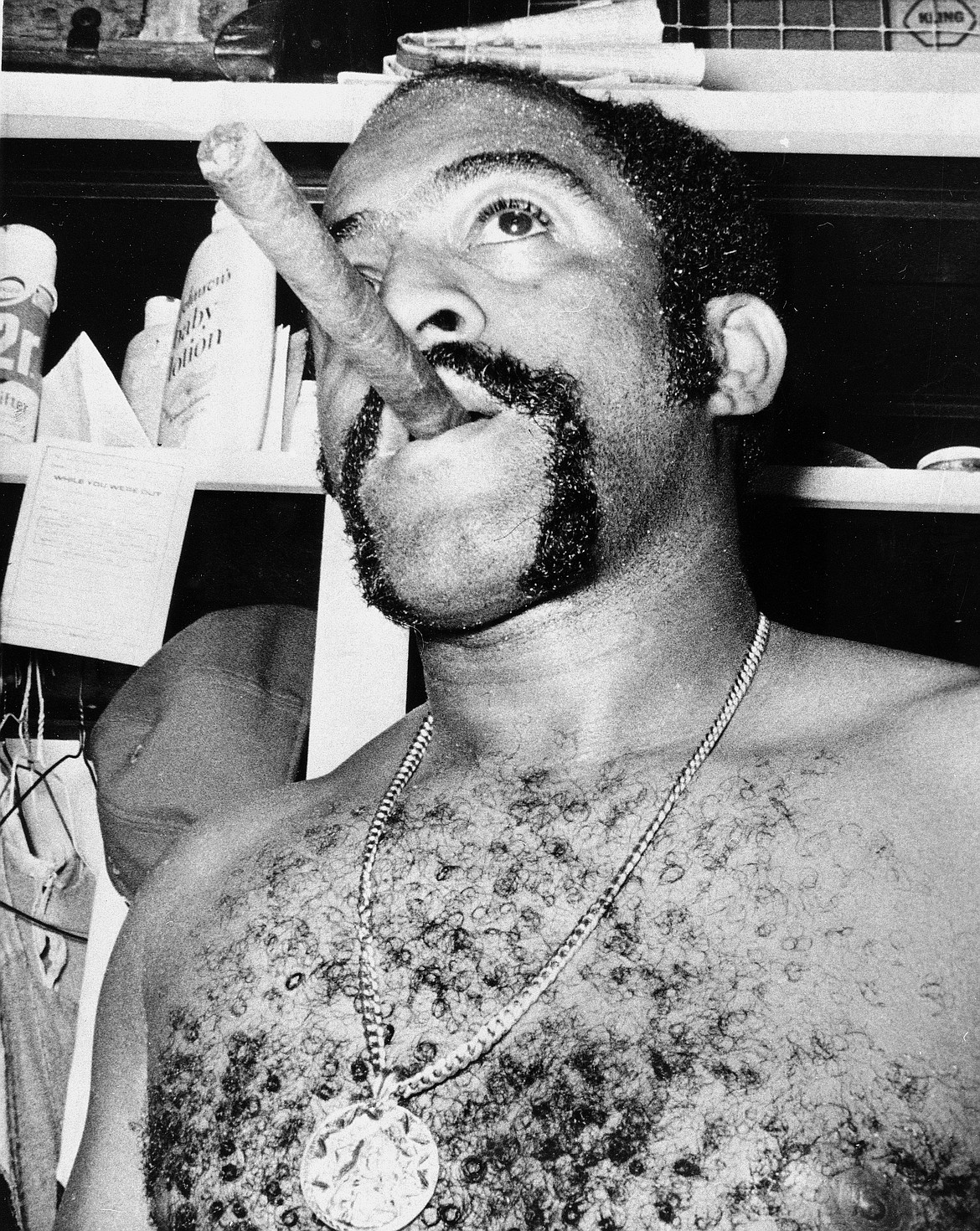
Luis Tiant stories are legendary; my favorite: Tiant was known to come out of the shower in the clubhouse, light a cigar, and look in the mirror (still naked) and declare that he was a "good-looking son-of-a-beech."
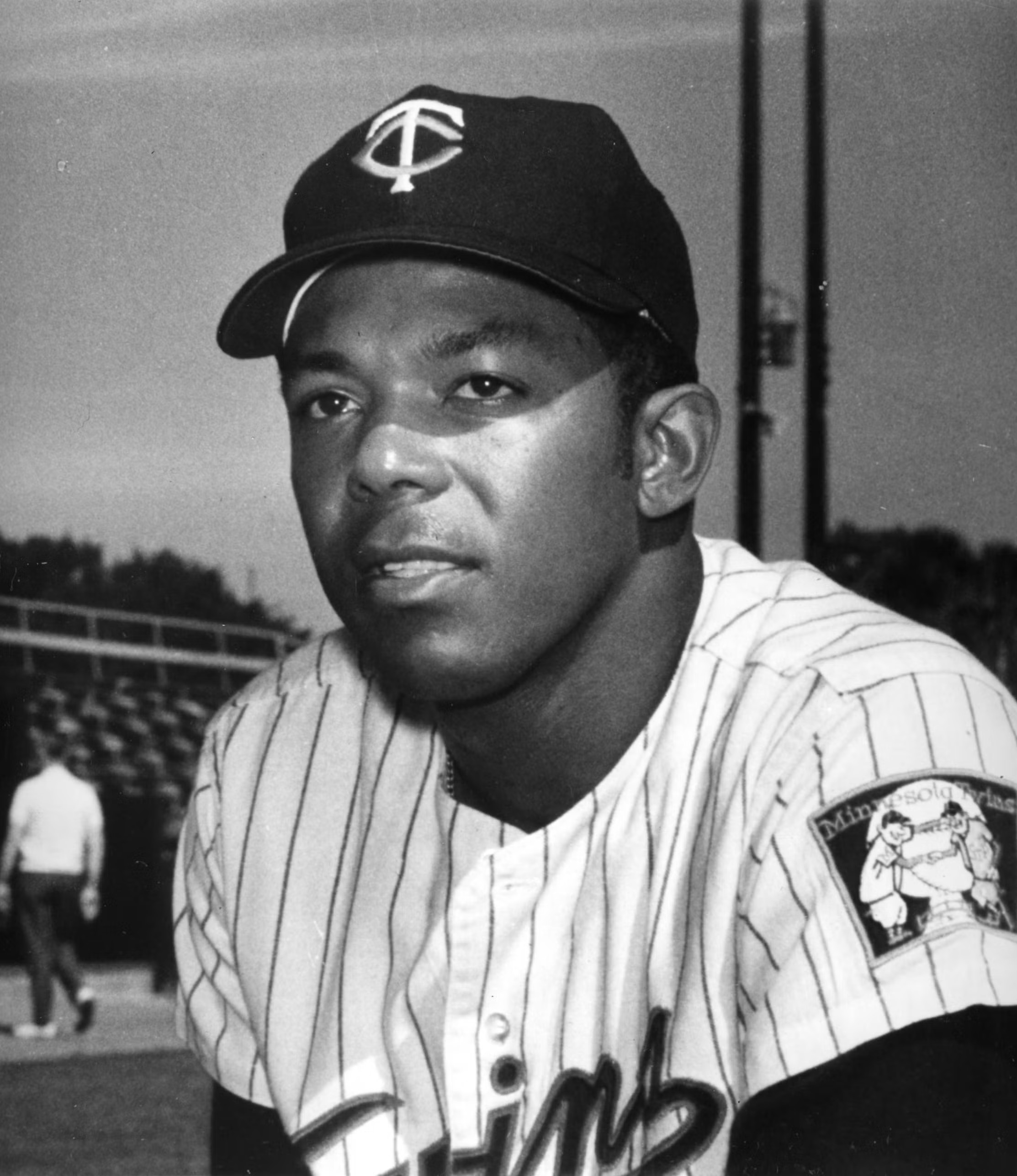
The next notable Cuban-born players to make the majors were José Canseco Capas Jr. and Rafael Palmeiro Corrales, who made their debuts in 1984 and 1985, respectively. Canseco was born in 1964. Canseco's father had worked in the oil business in the U.S. in the 1950's and he was able to emigrate in 1965. The family settled in Opa-locka, Florida, when Jose was 1.
Palmeiro was also born in 1964, and like Canseco his father tried to get his family out of Cuba almost immediately after his birth. The Palmeiros were not able to emigrate until 1971, when the family settled in Miami. Rafael's older brother, Jose Jr., was 19 at the time and was not allowed to accompany the family due to mandatory military service. He was reunited with his family in 1990.
By the mid-1990's, emigration from Cuba had become somewhat easier, if still restricted, and the number of Cuban-born players appearing in the major leagues started to increase. Notable names from the next wave of Cuban major leaguers include Liván Hernández, Orlando Hernández, Kendrys Morales, Aroldis Chapman, Yasmani Grandal, Yasiel Puig, Jorge Soler, and José Abreu.
The 1964 rookie class featured three players whose careers ended prematurely. Their stories are well-known so I won't go into too many details. Ranked in descending order of tragicness:
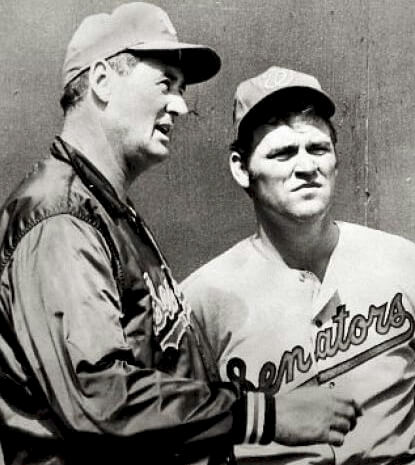
The 1964 rookie class featured two players who had success in the majors both as a pitcher and playing in the field.
Willie Smith started his professional baseball career in 1957 (at age 18) with the Birmingham Black Barons in the waning years of the Negro Leagues. He pitched and played outfield and first base. After three seasons, he signed with the Detroit Tigers. He was the International League pitcher of the year in 1963 with Syracuse and made his Major League debut with the Tigers in two brief callups, getting a win and two saves.
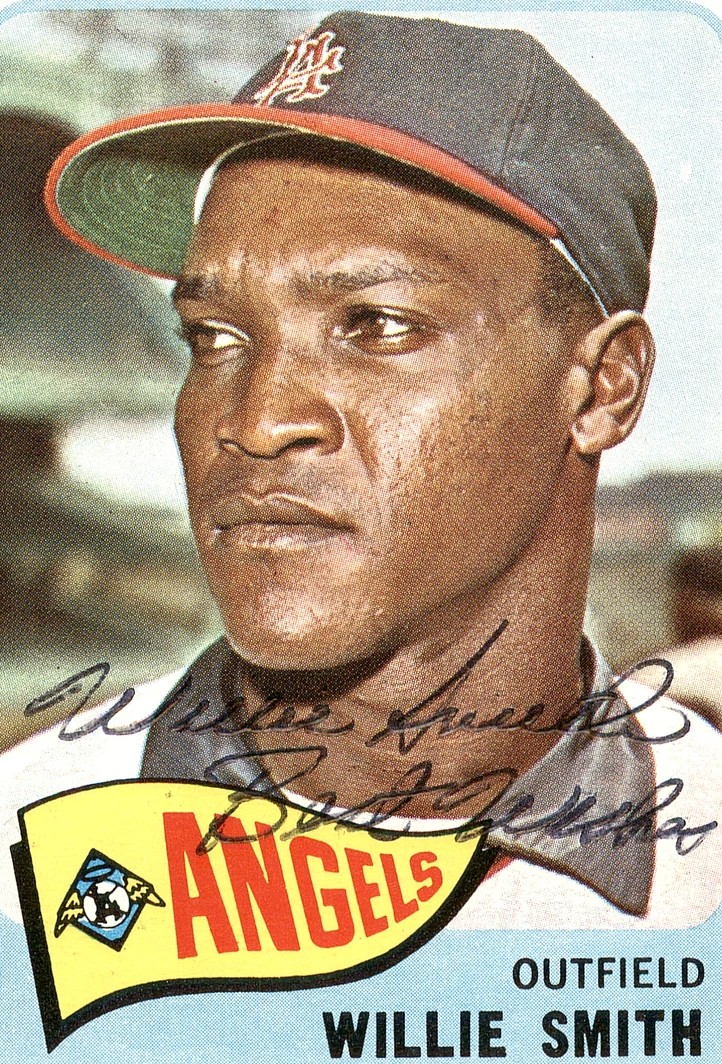
Smith was sent back to Syracuse to start the '64 season, but got his break when he was traded to the Los Angeles Angels in late April. He provided immediate help in the Halos' bullpen and earned a starting assignment in late May. On June 8, manager Bill Rigney sent him up pinch-hit for the Angels starting pitcher in the 7th inning. He got a hit, then stayed in the game in right field. In the bottom of the 8th, with the Angles ahead 3-2, Rigney brough Smith in from right field to pitch. With no opportunity to warm up in the bullpen, Smith struck out Vic Davalillo for the second out but then gave up back-to-back home runs to Leon Wagner and Bob Chance, costing the Angels the game. In his previous outing, he had put two runners on base in the 15th inning against the Yankees; he was replaced and Elston Howard doubled off the next reliever to give the Yankees the win. (Dean Chance had pitched the first 14 innings of that game for the Angels!)
Those two outings soured Rigney on Smith's ability as a pitcher. He made only two more relief appearances but started getting more frequent pinch-hitting appearances and eventually moved into a starting job in the outfield (both LF and RF). His SharkWAR for 1964 was 2.6: hitting - 2.2; pitching - 0.5; fielding - -0.1. He stayed in the majors as an outfielder until 1971 - he pitched in just three more games, in 1968.
The next player to have at least 0.5 hitting WAR and 0.5 pitching WAR in the same season, while playing at least 10 innings in the field, is... no one. Not even Shohei – he has played only 8 1/3 innings in the outfield in the major leagues.
The son of a major leaguer, Mel Queen grew up hanging around Forbes Field with his father. He signed with the Reds out of high school as an infielder and worked his way from the Illinois-Indiana-Iowa league, to the South Atlantic League, to the Pacific Coast League, switching to the outfield along the way. He made big league roster out of spring training in 1964, but with the Reds' starting outfield of Frank Robinson, Vada Pinson, and Tommy Harper (with Marty Keough in reserve), most of Queen's at bats came as a pinch hitter; he hit .200 in 99 plate appearances.
Queen spent most of '65 back in San Diego in the PCL, then made the Reds' opening day roster again in '66, again as a fifth outfielder. His duties were not limited to games: they included warming up pitchers in the bullpen, and when starting left fielder Deron Johnson was struggling to hit high fastballs he asked if there was anyone who could throw harder than the Reds' usual batting practice pitchers. Queen volunteered. Johnson hit only .257 that year, but Dave Bristol, who took over as the Reds manager after the All-Star break, noticed something in his new batting practice pitcher.
On July 15, with the Reds down 9-2 against St. Louis, Bristol sent Queen to the bullpen. But instead of being asked to warm up the next pitcher, Queen was told to get loose. He entered the game to pitch the top of the 9th and retired the Cardinals in order. On July 20, he pinch-hit for Reds starter Sammy Ellis in the ninth with the Reds trailing the Cubs 4-3. He walked and scored the winning run on Tommy Harper's triple, then stayed in the game to pick up his first career save, fanning 3 of the 4 hitters he faced. He finished 1966 with a .127 batting average in 69 plate appearances (-0.6 hitting WAR), and a 6.43 ERA in 7 innings pitched (-0.2 pitching WAR).
Queen went to Venezuala to play in the Winter Leagues to get more work in on the mound. He was reunited there with his San Luis Obispo High School teammate Jim Lonborg, which may have been a little awkward since by that time Queen had married and divorced Lonborg's sister. Nonetheless, he went 7-2, with five shutouts and a 0.76 ERA.
Queen had a magical season in 1967, going 14-8 with a 2.76 ERA, finishing 10th NL in ERA and 11th in pitching WAR (5.0). (His former brother-in-law Lonborg went 22-9 for Boston, with 4.7 pitching WAR, leading the Red Sox to the World Series.) But the increased workload took a toll; Queen suffered a torn rotator cuff and bouts of inflamation in his lungs. He pitched only 30 innings in 1968 and 1969 combined, and the Reds sold his contract to the California Angels after the '69 season. He delivered positive results out of the bullpen for the Angels in 1970-72, pitching in 95 games over three years (1.7 pitching WAR) with 13 saves, but his career was over by age 30.
Disappointed with the way his career ended, Queen stayed away from the game for several years, managing a restaurant among other pursuits. But in 1979, he got back into baseball as a pitching coach in the Indians' farm system, starting in Waterloo, Iowa. He worked his way up through the minors, then became the Indians pitching coach in 1982. He went on to manage in the minor leagues, was director of player development for Toronto, then was the Blue Jays Pitching from 1996-1999. He served 5 games as Toronto's interim manager when Cito Gaston was fired at the end of the 1997 season, with a 4-1 record.
The Phillies had four rookies who went on to have at least moderately successful careers - some quite a bit more than moderately successful. Since the Phillies finished in second place in the NL by only one game, it's tempting to make the argument that they could have squeezed out one or two more wins (thus winning the pennant) by giving these budding young stars more playing time. So, let's try to make that argument. I'm going to use weighted on-base average (wOBA) as the statistic for comparing offensive players - it's like on-base percentage but credits offensive outcomes (e.g., doubles versus singles) in proportion to their contribution to runs scored.
Dick Allen was one of two Phillies to play in all 162 games. Johnny Callison was the other, and between them they accounted for somewhere between one-half and two-thirds of the Phillies offense as measured by batting WAR. There's no opportunity for more playing time there.
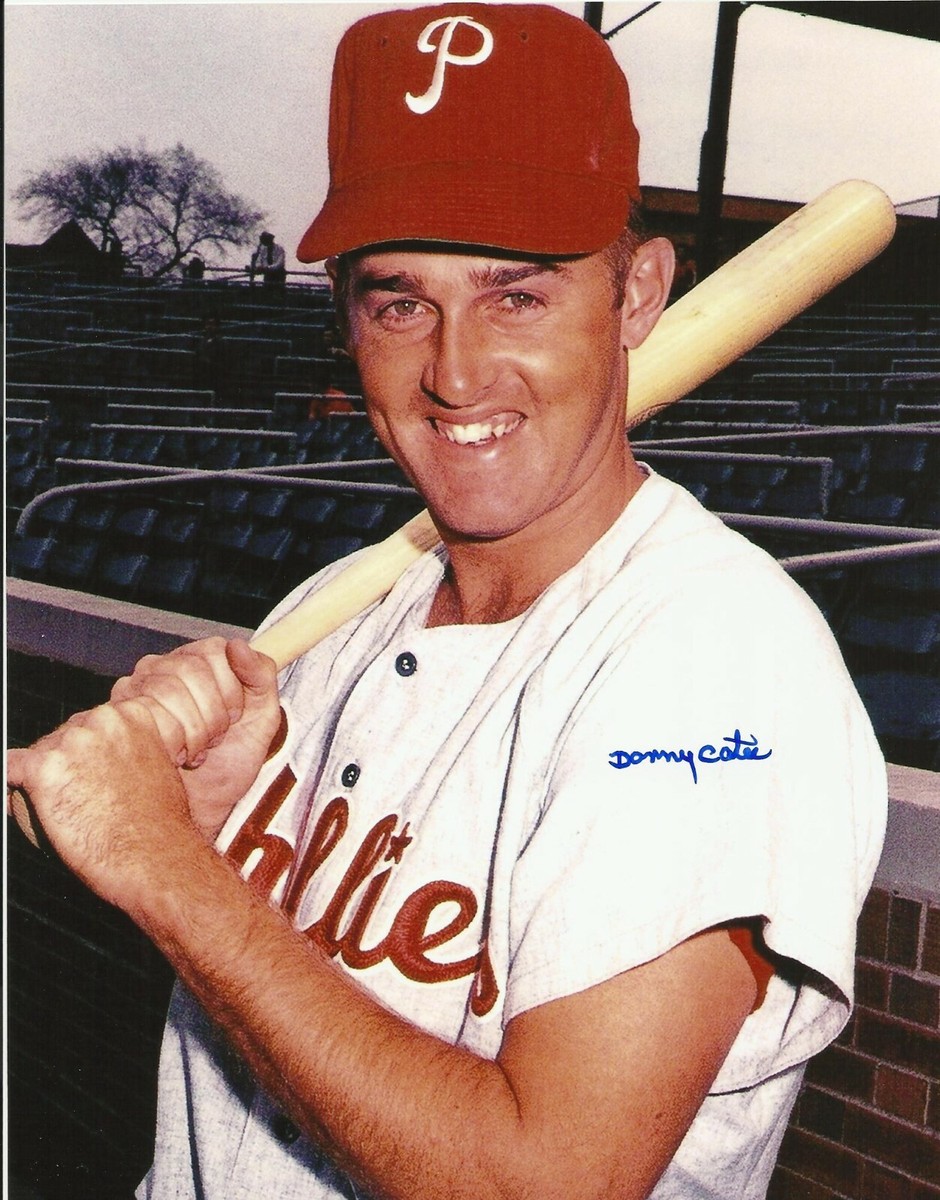
At just about every other offensive position, the '64 Phillies platooned. Danny Cater, was a right-handed hitter who played all three outfield positions, first base, and could fill in at third base. He made the team out of spring training, but played in just 60 games with 160 plate appearances; we was out from late July to early September with a broken arm after a collision with Joe Torre. Alex Johnson was a right-handed hitting outfielder who played 34 games in left field after being called up in late July, getting 116 plate appearances.
When the Phillies faced a right-hander, their starting outfield consisted of three lefties: Wes Covington (.361 wOBA) in left, Tony Gonzalez (0.333) in center, and Callison (.357) in right. When they faced a left-hander, their right-handed hitting options included Cater (.320), Johnson (.373), and Cookie Rojas (.327). Frank Thomas (0.362) was usually at first after being acquired from the Mets on August 7; prior to that, right-hander Roy Sievers (.270) or lefty John Herrnstein (.292). Ruben Amaro (.295) frequently moved to first in the late innings, with Bobby Wine replacing him at shortstop, improving the team defensively at both positions.
This is a lot of conjecture, but here goes my argument:
In the end, we'll give Gene Mauch some credit: there's not a lot of extra performance to squeeze out of the Phillies offense. Let's turn to pitching.
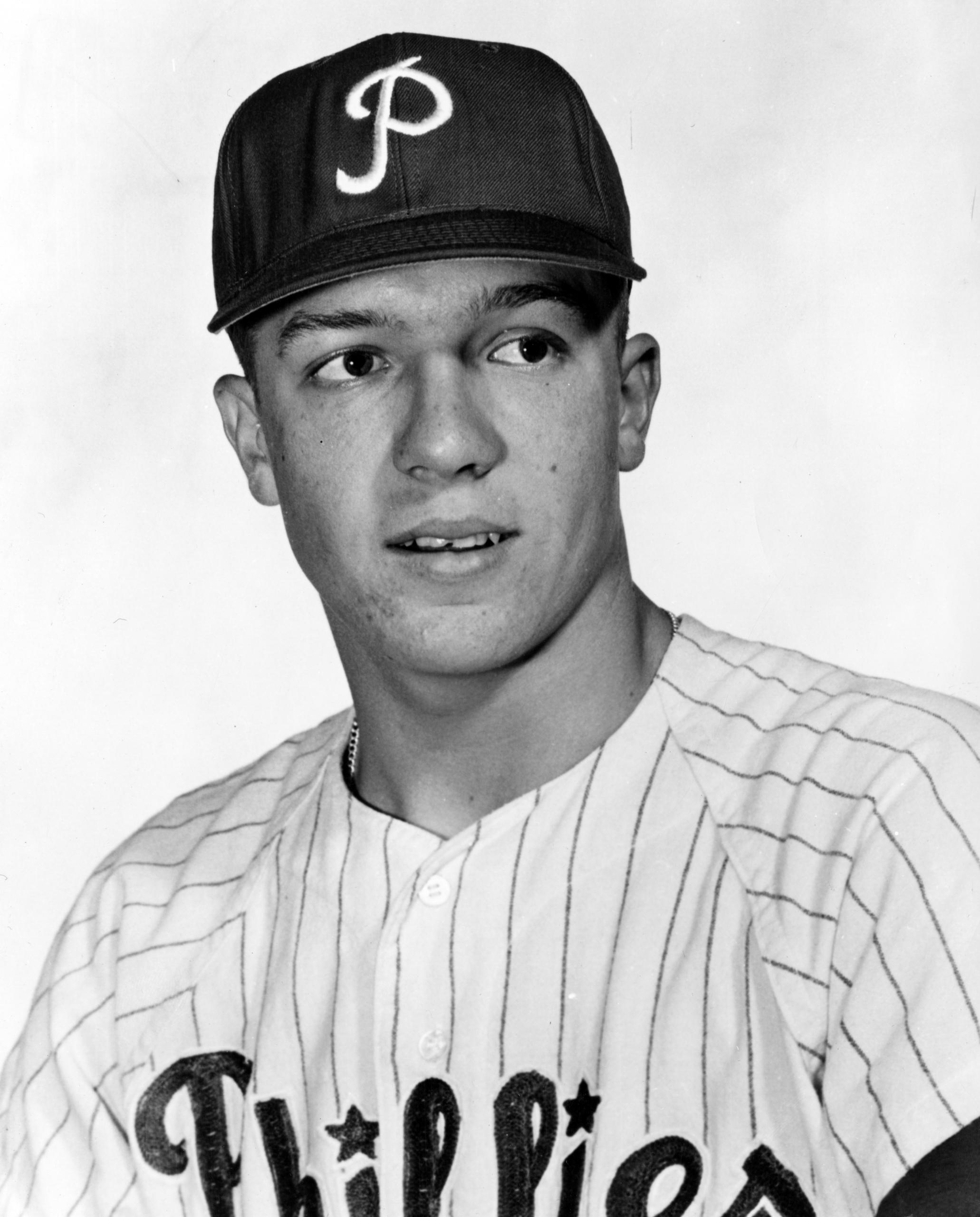
Rick Wise was a "bonus baby" - under Major League rules at the time the Phillies had to keep him on the roster the entire season because of the $12,000 bonus they had given him when he signed out of high school the year before. He won his first start of the year on June 21 against the Mets, in the second game of a double-header – Jim Bunning pitched a perfect game in Game 1. He got another win against the Dodgers on August 1, pitching four innings in relief, then won three straight starts. His next three starts did not go as well as he gave up 10 earned runs in just 5 innings, although he had a couple of effective relief outings mixed in with those starts. He pitched only 5 innings in relief during the 10-game losing streak that cost the Phillies the pennant.
In September, Gene Mauch started Bunning twice, and Chris Short once, on 2 days rest. In all three cases, these top pitchers were ineffective and lost. Art Mahaffey was the third starter while Dennis Bennett was out with a shoulder injury. All the pitchers who could have been used as the 4th starter in these situations to keep Bunning and Short on normal rest finished the season with negative Shark pitching WAR: Wise (-0.3), Ray Culp (-0.5), and John Boozer (-0.5). None of them were so bad that they were a "sure thing" loss. But in my view, it doesn't even matter if one of those pitchers started and got beat; keeping Bunning and Short on normal rest gives them a better than average chance of winning the next game, and that could have made the difference in the pennant race.
There were three Cleveland Indians pitchers among the 1964 rookie class: Luis Tiant, Tommy John, and Sonny Siebert. Two had excellent, near Hall-of-Fame careers, and the third had a solid 12-year career with two All-Star Game selections. All three were traded by the Indians within 5 years of their debut. Let's look at these trades and what the Indians got in return.
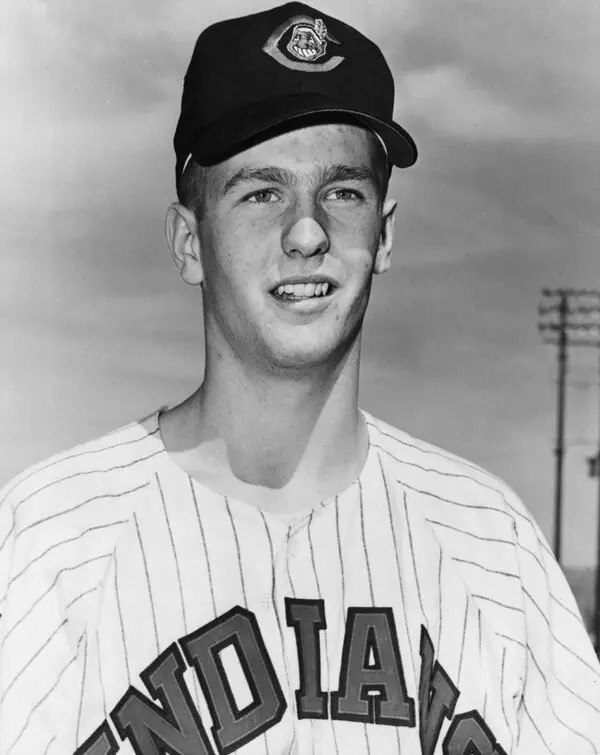
The trade to the White Sox was a complicated three-team deal, with the Indians receiving Rocky Colavito from Kansas City. This was a homecoming for Colavito, who was a fan favorite and home run champ in Cleveland during his first stint with the team in 1955-59, before being traded in the famous Harvey Kuenn deal with the Tigers. For the purposes of this analysis, I'm going to ignore the other players involved in the deal and look at the trade as a straight-up John-for-Colavito deal. This is generous to the Indians, because one of the "throw-ins" was a 21-year-old Tommie Agee, who went on to have a +25 SharkWAR career with the White Sox and Mets.
Colavito slugged 26 home runs and led the league with 108 RBI for the Indians in 1965, and followed up with a 30-home run campaign in 1966. The 1967 season began with Cleveland hiring recently-retired Braves first baseman Joe Adcock as their manager, who put Colavito in a platoon in left field with Leon Wagner. Neither player was happy with the platoon and with the Indians playing poorly, they traded Colavito to the White Sox in July for Jim King, a backup outfielder who contributed -0.3 SharkWAR before retiring. The Tribe finished 75-87 and Adcock never managed again. Colavito's SharkWAR with the Indians in two-and-a-half years was 12.0.
Siebert was 16-8 as a starter for the Indians in both 1965 and 1966. His won-loss record dipped to a combined 22-22 in 1967-68, but his ERA and WHIP were still very good. In April of 1969, after making just two starts (and already 32 years old), he was traded (along with catcher Joe Azcue and pitcher Vicente Romo) to Boston for Dick Ellsworth, Ken Harrelson, and Juan Pizarro.
Siebert acculated 9.8 SharkWAR through 1975, his last season, mostly with Boston. The Red Sox used him as a "swingman" (as they were called in those days – both starting and relieving) in '69, then moved him back into the starting rotation for 1970-72, where he had records of 15-8, 16-10, and 12-12. He also enjoyed hitting in Fenway Park, hitting 6 home runs in 1971. Vicente Romo also pitched well, mostly in relief, for the Red Sox, White Sox and Padres (2.8 SharkWAR) before returning to his native Mexico and pitching in the Mexican League for the next 7 seasons.
Dick Ellsworth was a mainstay in the Cubs rotation from 1960-1966, winning 22 games in 1963. He also lost 20 in 1962 and 1966. After a terrible year in Philadelphia in '67, he rebounded to go 16-7 with the Red Sox in '68. But Ellsworth had lost velocity on his fastball and was suffering a nagging ankle injury - he went 6-9 in 22 starts for the Tribe (-0.6 SharkWAR) and was out of baseball by 1971, at age 31.
Ken Harrelson was one of the few hitters to have a good year in MLB in 1968 - the Year of the Pitcher. He finished third in the AL with 35 home runs, slugged .518, and looked to have a promising future when the Indians dealt for him at age 27. The Red Sox had a surplus of outfielders with Yaz in left, Reggie Smith in center, and Tony Conigliaro returning to play right. (Harrelson had signed with the Red Sox in 1967 to replace Conigliaro in the lineup, after being released by the Kansas City Athletics due to a long-running fued with A's owner Charlie Finley.) Harrelson loved playing in Boston and considered not reporting to Cleveland. He ended up reporting after a conversation with Commissioner Bowie Kuhn, and had a good year for the Indians in 1969 (3.5 SharkWAR), but broke his leg in Spring Training of 1970. He returned for the final 17 games of 1970 and 52 games in 1971 (-0.3 SharkWAR), but found that he had lost his passion for playing baseball. He quit the game and decided to pursue a career in professional golf. Failing to make it on the PGA tour, he returned to Boston as an announcer in 1975, before moving to Chicago in 1981 and inflicting his version of the English language on White Sox fans for 38 years.
Juan Pizarro was a front-line starter for the White Sox from 1961 to 1964, winning 61 games. What started as a sore arm in 1965 led to a torn triceps, and Pizarro moved to the bullpen in 1966. The White Sox traded him to the Pirates after the '66 season for Wilbur Wood (an incredible trade for the Sox - +36 SharkWAR!), who sold him to the Red Sox in June, 1968. Pizarro pitched in 48 games (44 in relief) for Cleveland in 1969, with a 3-3 record, 4 saves, and a 3.16 ERA (1.1 SharkWAR), before being sold to the Athletics in September.
But Tiant fell to 9-20 in 1969, with the Indians finishing a league-worst 62-99. Given the changes to the mound height and the Indians poor hitting, Tiant's won-loss record and 3.71 ERA were not terrible, but he went from being the best pitcher in the AL in 1968 to league average in '69. In December, Tiant was traded to Minnesota in a six-player trade, with the Indians receiving Graig Nettles and 3 others. For the purpose of this analysis, we'll again simplify and consider this trade to be Tiant-for-Nettles, straight up.
The 26 year-old Nettles became a reliable power hitter and one of the best defensive third-baseman in the AL during his time with Cleveland, posting 19.6 SharkWAR over 3 years. The Indians, however, were stuck in the cellar of the AL East and dealt Nettles to the Yankees following the 1972 season for John Ellis, Jerrey Kenney, Charlie Spikes, and Rusty Torres – a classic quality-for-quantity trade by a team going nowhere in standings.
Following the value of the Nettles trade to the Indians is a bit involved: Ellis was dealt to the Rangers for two players, one of whom was later traded for Alan Bannister, who had some good seasons in Cleveland; Spikes was traded for Tom Veryzer, who had some poor seasons in Cleveland; and Torres was traded to the Angels for Frank Robinson, who became the Indians player-manager in 1975. In total, Cleveland got 6.7 SharkWAR for the players they received for Nettles and the subsequent trades of those players, added to the 19.6 they got from Nettles for a total of 26.3.
Tiant, meanwhile, started well for the Twins but developed a sore shoulder that was eventually diagnosed to be caused by a cracked bone. He sat out for 10 weeks to rest, and was 1-3 when he returned for the last weeks of the 1970 season. In spring training of 1971, he pulled a muscle in his rib cage and pitched poorly, and the Twins released him before opening day. Tiant believed the Twins were simply trying to save money by cutting him, but other teams had doubts about his injury status as well – only the Braves were willing to sign him to a minor league "trial" contract. When the Braves declined to promote him after 30 days in Richmond, he became a free agent again, signing with the Red Sox and being sent to AAA Louisville.
Tiant started slowly in Boston but by the beginning of the 1972 season, fully recovered from his injuries, he became one of the dominant pitchers in the American League. Through 1975, when he could have become a free agent had he stayed with Cleveland, his total SharkWAR after the trade is 23.7. Besides that, he was a good-looking son-of-a-beech.
Adding it all up, the total SharkWAR for the three pitchers the Indians traded was 66.8, while the SharkWAR of the players they got in return was 41.7, a difference of 25.1. Said differently, those three trades cost the Indians more than 2 wins per year for the 11-year period of 1965-1975, compared to how they would have done had they not made the trades.
To be fair, though: